Установка шумоизоляции в квартирах in 2024: what's changed and what works
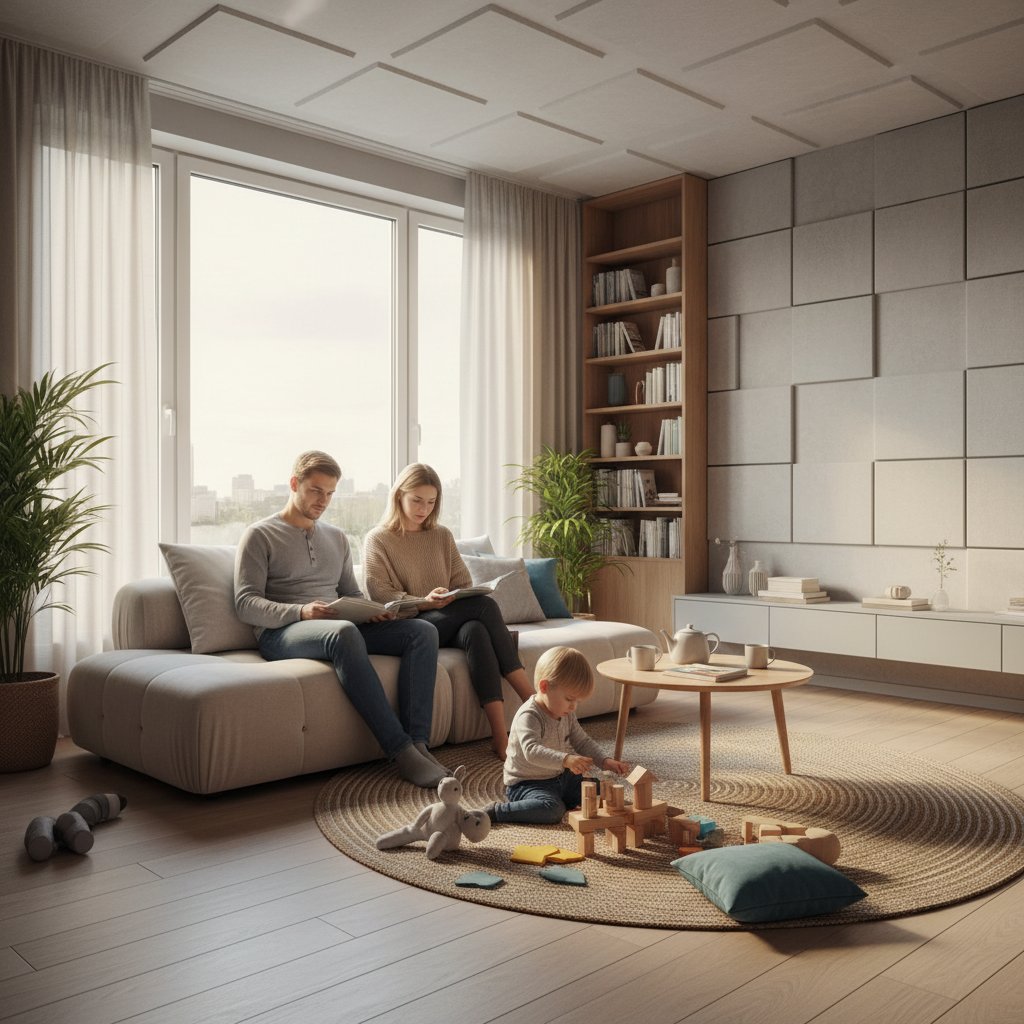
Living in an apartment shouldn't mean accepting your neighbor's 2 AM movie marathons or the upstairs toddler's tap-dancing practice. Sound insulation technology has evolved dramatically, and 2024 brings fresh approaches that actually work—without gutting your entire space or draining your savings account.
The game has changed. New materials perform better, installation methods are less invasive, and building codes in many regions now mandate stricter acoustic standards. Here's what you need to know.
What Actually Works for Apartment Soundproofing in 2024
1. Acoustic Mineral Wool Has Replaced Foam (And It's Not Even Close)
Remember those pyramid-shaped foam panels everyone used? They're basically museum pieces now. Acoustic mineral wool—specifically products like Rockwool or Knauf Insulation—delivers noise reduction coefficients (NRC) of 0.95 to 1.0, compared to foam's measly 0.4 to 0.6. That's more than double the absorption capacity.
These materials handle low-frequency sounds (think bass from speakers or footsteps) far better than anything we had five years ago. Installation runs between $8-15 per square foot including labor, but you're looking at 15-20 decibel reduction on shared walls. That's the difference between hearing full conversations and catching maybe a muffled word or two.
The catch? Mineral wool needs proper sealing. Air gaps kill performance. Contractors who know their stuff will caulk every seam with acoustic sealant—not regular silicone, which stays too rigid.
2. Mass-Loaded Vinyl Layers Now Come With Built-In Damping
MLV (mass-loaded vinyl) sheets have been around forever, but 2024 versions incorporate constrained-layer damping directly into the material. Products like QuietBarrier HD or Acoustiblok combine dense vinyl with viscoelastic polymers that convert sound energy into tiny amounts of heat.
You can now achieve 27-30 dB reduction with a single 1/8-inch layer, compared to needing double or triple layers previously. Installation is straightforward—staple or glue it to existing walls before adding a new drywall layer. Total thickness added to your wall: about 5/8 inch including the new drywall.
Expect to pay $2-3 per square foot for the material alone. A typical 12x12 bedroom wall treatment (excluding the door wall) costs roughly $350-500 in materials, plus $400-600 for professional installation. DIY is absolutely possible if you're handy with a staple gun.
3. Decoupling Walls Without Major Construction
Here's where things get interesting. Resilient sound clips (like RSIC-1 or WhisperClips) let you create an air gap between your existing wall and a new drywall layer without building an entire stud wall. These Z-shaped metal clips absorb vibration and prevent sound transmission through direct contact.
The clips attach to your existing wall studs, then hold furring channels that support new drywall. You lose about 2 inches of room depth, but gain 10-15 dB of additional isolation—especially crucial for impact noise from adjoining units. This method costs $3-5 per square foot for materials, significantly less than traditional double-wall construction.
One apartment owner in Brooklyn documented reducing hallway noise by 70% using this method combined with mineral wool. Her total investment for one shared wall: $1,200. Sleep quality: priceless.
4. Floor Underlayment That Actually Stops Footstep Thunder
If you're dealing with noise from above, 2024's rubber-cork composite underlayments deliver IIC (Impact Insulation Class) ratings of 70-74, well above the 50 minimum most buildings require. FloorMuffler or AcoustiCork products run $1.50-3 per square foot and install under any flooring type.
The rubber component handles impact vibration while cork absorbs airborne sound. For maximum effect, combine this with interlocking foam tiles that have built-in mass—some newer products incorporate recycled rubber pellets that add density without extra height.
Renters, pay attention: floating floor systems with these underlayments require zero permanent modifications. You can install luxury vinyl plank over the acoustic layer, enjoy quieter living, and remove everything when you move. Just check your lease about temporary flooring.
5. Acoustic Door Seals That Don't Look Industrial
That gap under your door? It's sabotaging everything else you've done. Automatic door bottoms (like those from Zero International) drop a seal when the door closes, blocking the 1/2 to 3/4-inch gap that leaks sound like a sieve.
Modern versions are nearly invisible and operate silently. Pair them with compression gaskets around the door frame (replacing standard weatherstripping), and you'll add 8-12 dB of isolation. Total cost: $80-150 per door for quality components.
Solid-core doors (1-3/4 inch thick) outperform hollow-core by 10-15 dB. If you're renovating, swapping doors costs $200-400 installed but makes a massive difference. Some newer acoustic doors include internal damping layers that push performance even higher.
6. Smart Noise Monitoring Shows What's Actually Working
Here's something genuinely new: affordable decibel meters and apps (like NIOSH Sound Level Meter or Decibel X) let you measure before and after results. Professional acoustic consultants charge $500-1000 for assessments, but a $30 calibrated meter gives you 90% of the useful data.
Take baseline readings at different times—early morning, evening, late night. After each improvement, measure again. You'll quickly learn which investments deliver results and which are marginal. This data-driven approach prevents throwing money at solutions that don't match your specific noise problems.
One Chicago apartment dweller discovered their biggest issue wasn't the shared wall but HVAC duct transmission. A $300 duct liner installation solved more than the $2,000 they'd planned to spend on walls. Measure first, spend smart.
The Reality Check
Perfect silence doesn't exist in multi-family housing. Even with $10,000 in soundproofing, you might still catch bass frequencies during a neighbor's party. The goal is reducing intrusive noise to background levels—where you're not constantly aware of sounds from adjacent units.
Start with the biggest offenders. Identify whether you're dealing with airborne sound (voices, TV) or impact noise (footsteps, furniture), then target solutions accordingly. Most apartment dwellers see life-changing improvements with $1,500-3,000 in strategic upgrades focused on one or two problem areas rather than mediocre treatment everywhere.
The materials work. The science is solid. Just skip the cheap foam panels and focus on density, decoupling, and sealing every possible gap. Your sanity—and sleep schedule—will thank you.